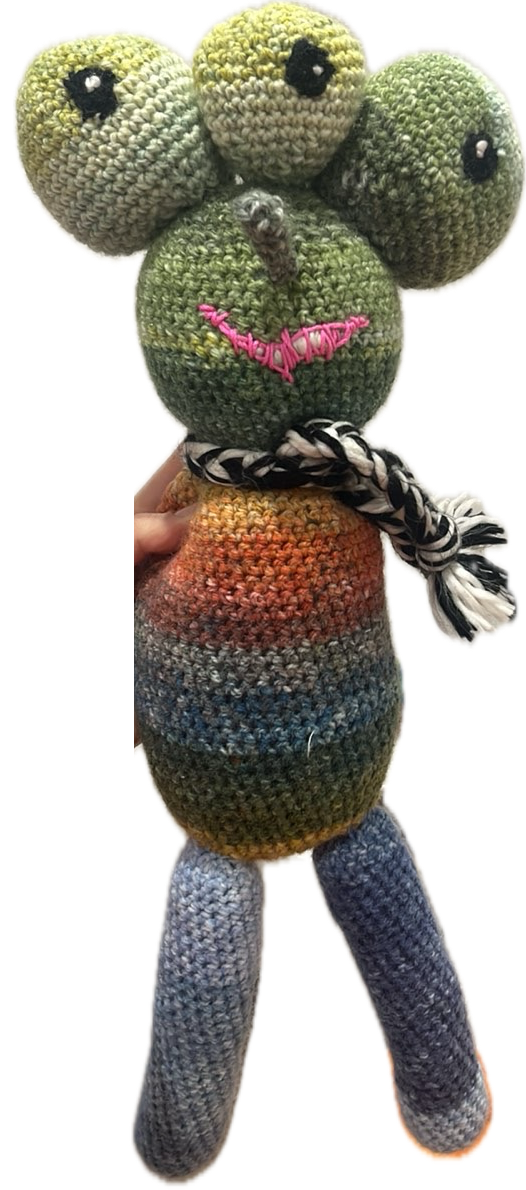
Last week, I successfully defended my thesis and officially completed my master's degree in data science at the University of Barcelona. Cue the applause!
Just kidding about the applause. But seriously, I'm very excited for the next chapter of my career journey.
Before continuing on to my next exploratory blog post, I wanted to briefly cover what I've been up to the past few months working on this project.
In this study, I compared the effectiveness of various fairness methods for mitigating bias in machine learning models used for clinical prediction tasks. As for the dataset, I used the MIMIC-IV database which is the fourth iteration of the Medical Information Mart for Intensive Care created in collaboration with researchers from the Massachusetts Institute of Technology (MIT).
I chose this topic because, given that datasets are embedded with the existing bias found in today's society, machine learning models trained on those datasets are prone to exhibiting the same biases. As ML models expand into more sensitive domains, such as healthcare, fairness methods should be implemented alongside them. However, while most traditional fainess methods are able to improve fairness by some metric, they are often a detriment to model accuracy and/or transparency.
Fairness-aware interpretable modeling, or FAIM, is a more recently published fairness method that mitigates bias and maintains both accuracy and transparency. After replicating the results of the cited paper using their GitHub repo, I wanted to find out if FAIM would hold up with a different clinical task.
I changed the task from predicting hospitalization outcome after emergency department (ED) stay to invasive mechanical ventilation (IMV) prediction within the first 48 hours of a patient's stay in the intensive care unit (ICU). IMV is a form of oxygen assistance that facilitates patient airflow through a tube inserted through the nose or mouth or through a tube atttached directly to the trachea. I chose this specific treatment because of a study that found that in the MIMIC-IV database there were lower rates of IMV in Black, Hispanic, and Asian patients than there were in White patients with the same health condition, despite race not being clinically relevant to the treatment.
For sensitive attributes, I considered both sex and race and mainly focused on intersectional demographic subgroups in my results, as intersectionality reveals unique biases that emerge from the interaction of social categorizations, providing a more comprehensive understanding of each individual patient's experience.
Ultimately, I found that, although it did not mitigate bias completely, FAIM was able to improve fairness metrics while maintaining model accuracy and transparency. Compared to other state-of-the-art fairness methods, which may have improved one aspect of model fairness but damaged others, FAIM resulted in improvements across the board.
For a much more comprehensive description of my work and results, including all of my code, report, and defense slides, it is available here.
Thank you to everyone who helped me along the way :)